Here’s a clear, comparable overview of how VMware’s security portfolio (Broadcom’s VMware vDefend) stacks up against key competitors like Palo Alto Networks, Cisco, and Fortinet in terms of features, use cases, and strengths — with practical context.
1. VMware vDefend (Broadcom) — Best for Private Cloud & Lateral Security
Core Strengths
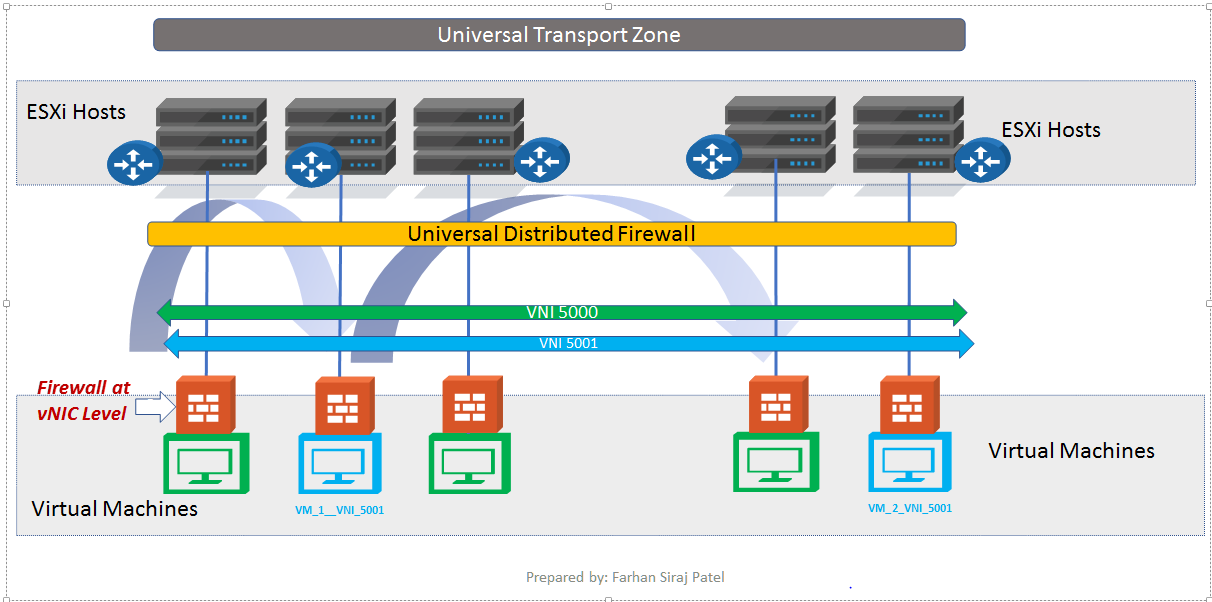
✔ Integrated Distributed Firewall (DFW):
Runs in the hypervisor (kernel) — cannot be disabled by malware inside a VM.
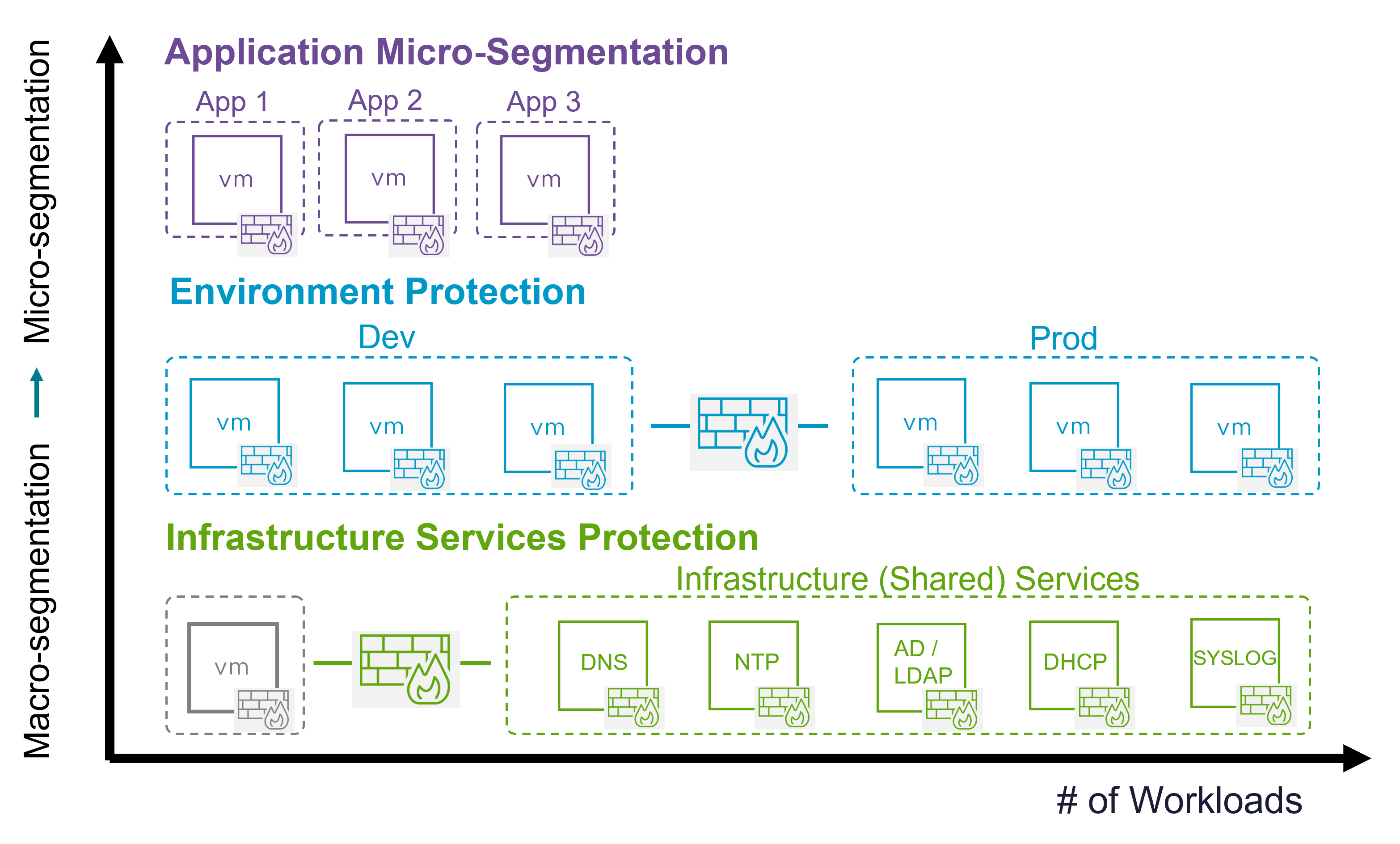
Enforces micro-segmentation policies directly at each workload (east–west).
Automatically follows workloads across hosts and vMotion. (VMware Blogs)
✔ Zero Trust & Lateral Security:
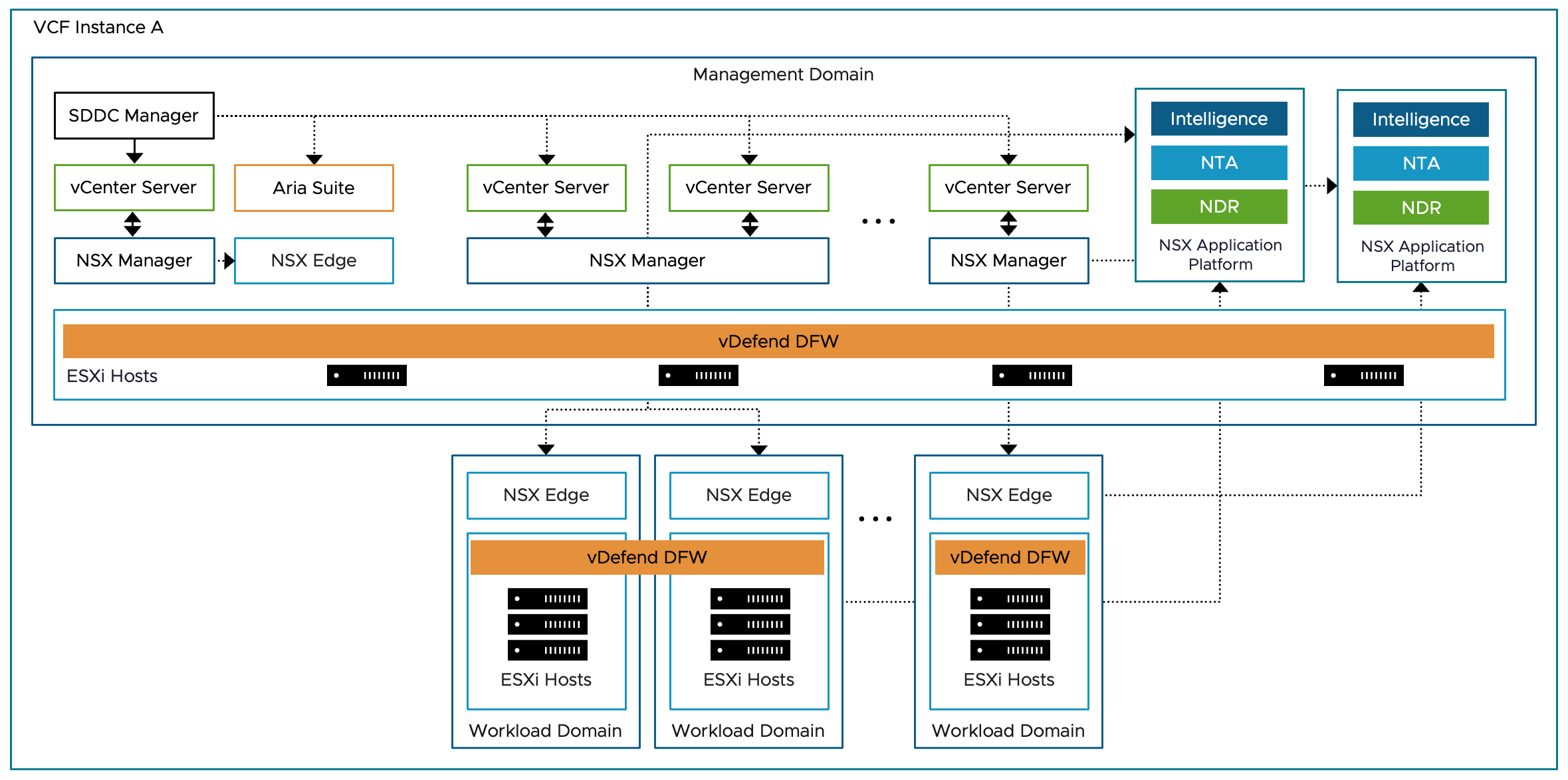
Deep integration with VMware Cloud Foundation (VCF) — enables strong Zero Trust inside private cloud environments.
Tag-based policies simplify segmentation at scale. (VMware Blogs)
✔ Built-in Threat Intelligence & NDR:
Network Detection & Response (NDR) with enhanced threat intel for air-gapped environments.
Advanced threat detection including malware and multi-stage attack correlation. (Broadcom Investors)
✔ Security Intelligence & Automation:
Security Segmentation Assessment reports provide visibility and recommendations.
“Micro-segmentation as code” and API-driven policies for automation and integration. (Broadcom Investors)
✔ IaaS & Workload Protection:
Native support for VMs, containers, and integration with VMware Cloud.
Fileless malware defense and deeper policy rule analysis. (VMware Blogs)
2. Palo Alto Networks — Best for Enterprise Zero Trust & NGFW
Core Strengths
✔ Next-Generation Firewall (NGFW):
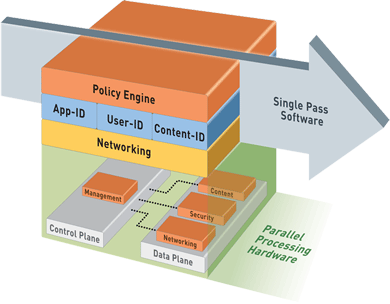
Deep application inspection, user identification, content filtering, and threat prevention.
Proprietary SP3 architecture designed for high-performance with security services enabled. (Palo Alto Networks)
✔ True Zero Trust Platform:
Continuous trust verification and traffic inspection across users, devices, and apps.
Integration with identity stores and SaaS security. (Palo Alto Networks)
✔ Threat Intelligence & AI:
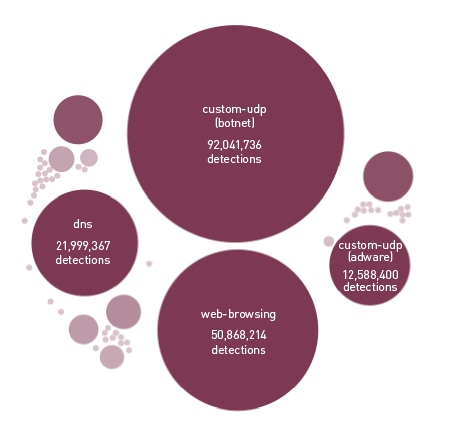
AI-driven detection and analysis to block zero-day and evasive threats.
Comprehensive DNS security, DLP, and advanced URL filtering. (CBT Nuggets)
✔ Cloud & SASE Integration:
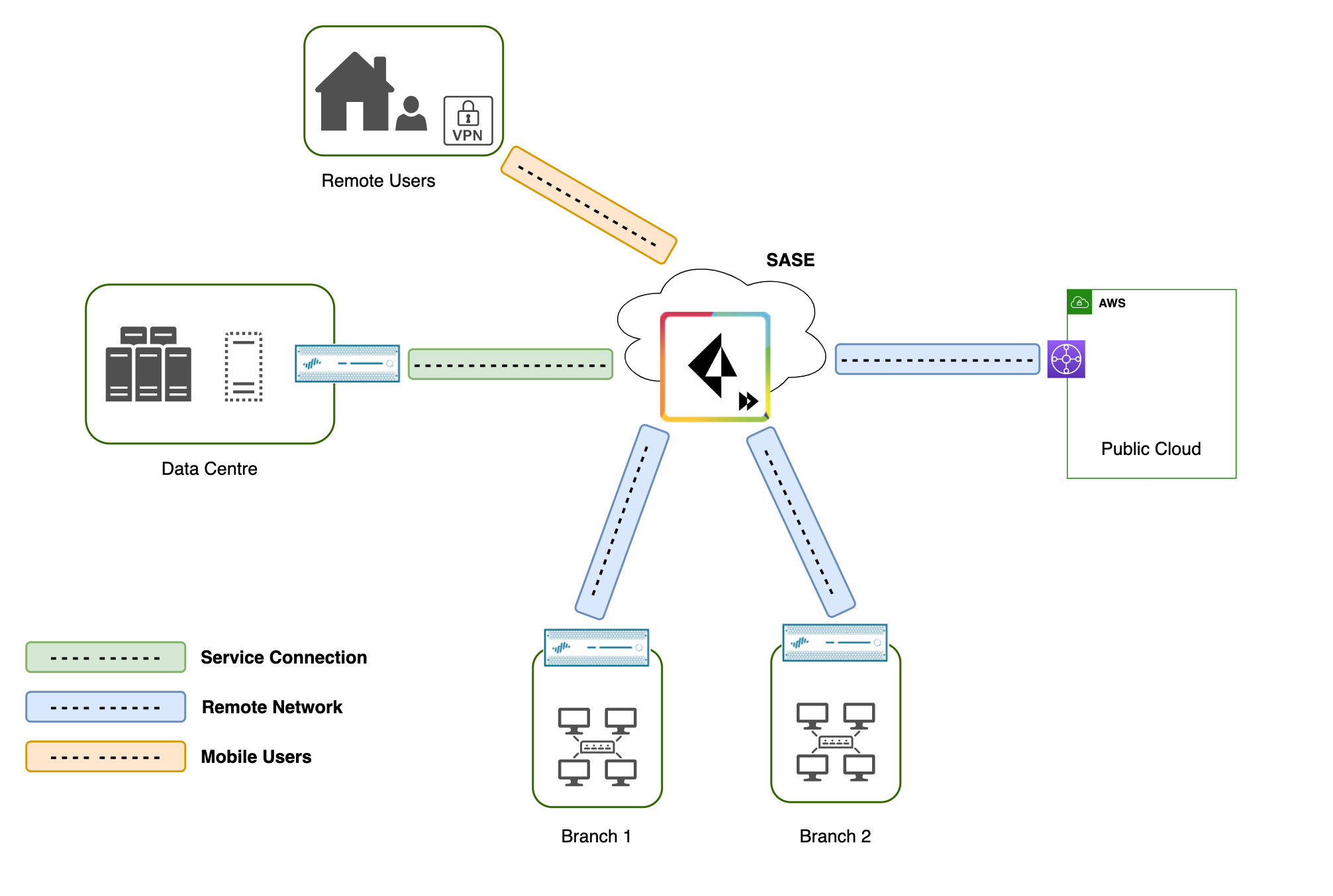
Strong support for cloud security via Prisma Access (SASE).
Provides secure access for remote users and hybrid environments. (Gartner)
When it excels vs VMware:
Better suited for enterprise perimeter and WAN security, broad Zero Trust across hybrid cloud/remote users, and integrated threat intelligence across networks, endpoints, and cloud.
3. Cisco Secure (Best for Hybrid & Multi-Vendor Ecosystems)
Key Features
✔ Broad Security Suite:
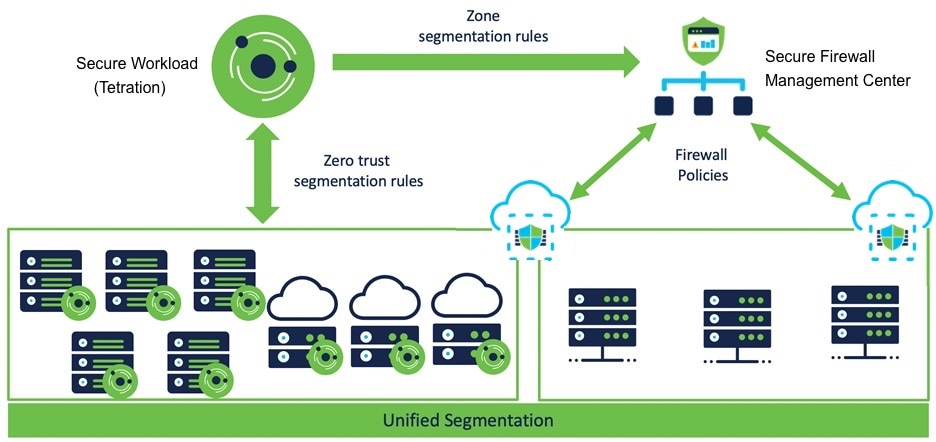
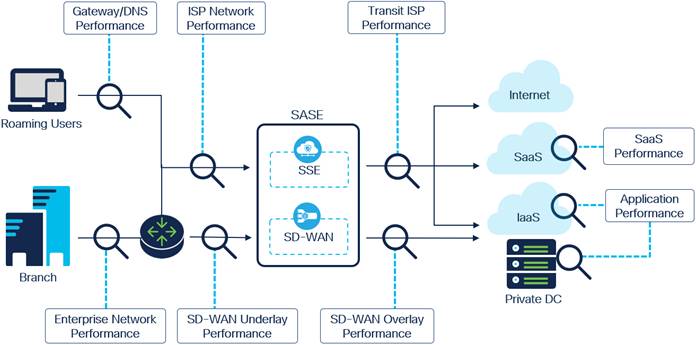
Secure firewall + threat detection + endpoint/identity integration (TALOS threat intel). (Cisco)
✔ Hybrid Environment Strength:
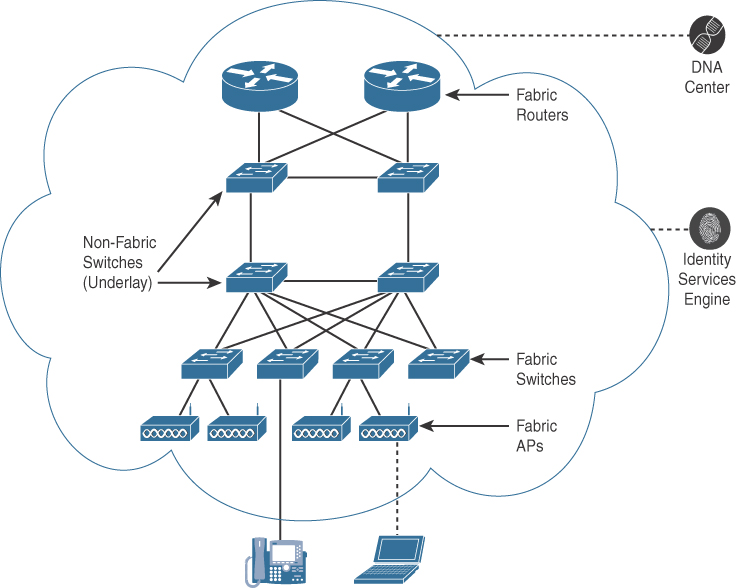
Works well where organisations already use Cisco networking and security gear.
✔ Threat Intelligence Integration:
Global threat feed with incident response backing.
Caveats Compared to VMware:
Not as strong at hypervisor-level micro-segmentation inside private clouds.
Often requires additional infrastructure for deep east–west segmentation.
4. Fortinet — Best for Cost-Effective NGFW & SD-WAN Bundles


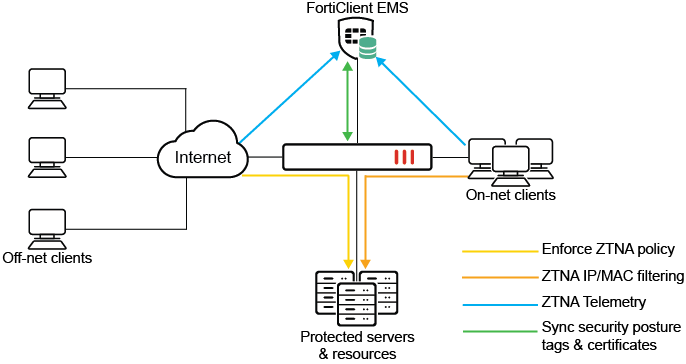
Key Features
✔ All-In-One Security:
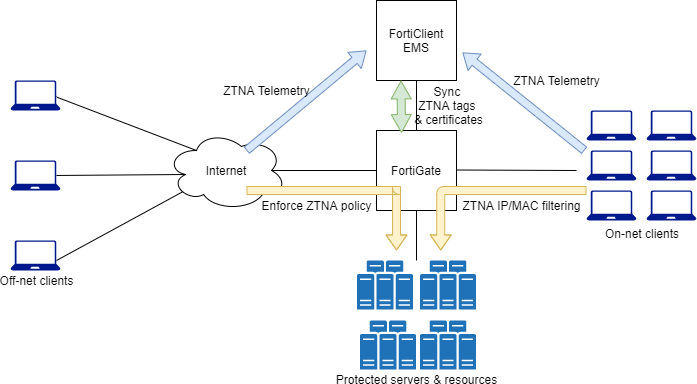
Firewall, IPS, UTM, SD-WAN, and some ZTNA support in one platform. (TechRepublic)
✔ Good Value & Deployability:
Strong value in terms of cost performance, integrated SD-WAN, basic Zero Trust. (Fortinet)
✔ Ease of Deployment:
Often simpler to configure for perimeter/internal segmentation.
Limitations vs VMware/Palo Alto:
Micro-segmentation and deep workload protection not as advanced.
Feature parity across platforms is inconsistent. (Palo Alto Networks)
Side-by-Side Capabilities Comparison
| Feature / Capability | VMware vDefend (Broadcom) | Palo Alto Networks | Cisco Secure | Fortinet FortiGate |
|---|---|---|---|---|
| Micro-segmentation | Native hypervisor-embedded (true east-west) (VMware Blogs) | Available via integrations but not hypervisor level | Limited | Limited |
| Distributed Firewall | Yes (kernel-level) (VMware Blogs) | NGFW (edge/segment) | NGFW | NGFW |
| Threat Detection & Response | Built-in NDR w/ advanced threat analytics (Broadcom Investors) | Strong AI + threat intel | Good global threat intel (Cisco) | Decent but less advanced |
| Zero Trust Support | Strong for workloads & private cloud (VMware Blogs) | Holistic enterprise (users + devices + cloud) (Palo Alto Networks) | Moderate | Basic |
| Cloud/SASE | VMware Cloud integrated | Strong via Prisma Access (Gartner) | Good | Basic |
| Automation & Policy Intelligence | API-driven segmentation, rule analysis (VMware Blogs) | Automation + ML | Some automation | Some automation |
| Best Fit | Private cloud / VMware environments | Enterprise hybrid multi-cloud Zero Trust | Hybrid orgs with Cisco infra | SMB / cost-sensitive environments |
How to Pick Based on Use Case
Private Cloud & Workload Security
⇒ VMware vDefend (Broadcom)
Best for deep east–west segmentation, Zero Trust inside VMware Cloud, and scalable protections embedded into the hypervisor. Ideal when VMware Cloud Foundation is core infrastructure.
Enterprise WAN & Zero Trust Across Users + Cloud
⇒ Palo Alto Networks
Leads in NGFW + SASE + Zero Trust platform, protecting perimeter, remote users, cloud SaaS, and mobile devices with integrated threat intelligence and AI.
Hybrid Multi-Vendor Networks
⇒ Cisco Secure
Strong when you already run Cisco network/security gear, want integrated threat feeds and compliance support.
Final Summary
VMware vDefend (Broadcom)
✔ Deep distributed firewall and micro-segmentation built into the hypervisor
✔ Strong lateral security & Zero Trust inside private clouds
✔ API automation & rule analysis tools
✔ Tight integration with VMware Cloud Foundation
Competitors
Palo Alto Networks: Stronger multi-cloud/perimeter Zero Trust and AI-driven threat protection
Cisco Secure: Good hybrid security with global threat intel
Fortinet: Balanced security + SD-WAN at better cost but weaker internal segmentation


No comments:
Post a Comment